
Discover Verona
- About 255,000 residents
- Veneto
- CET/CEST (UTC+1 / UTC+2)
History
Verona’s origins reach back into prehistory, with a first settlement on San Pietro hill dating to the Neolithic, followed by Etruscan and then Gallic rule. In the 1st century BC the city became a Roman colony and quickly grew into one of northern Italy’s most important centres: the historic centre’s street grid, still laid out along its original Roman axes, bears the marks of that era, alongside monuments like the Arena, the Roman Theatre, and the gates of Porta Borsari and Porta Leoni.
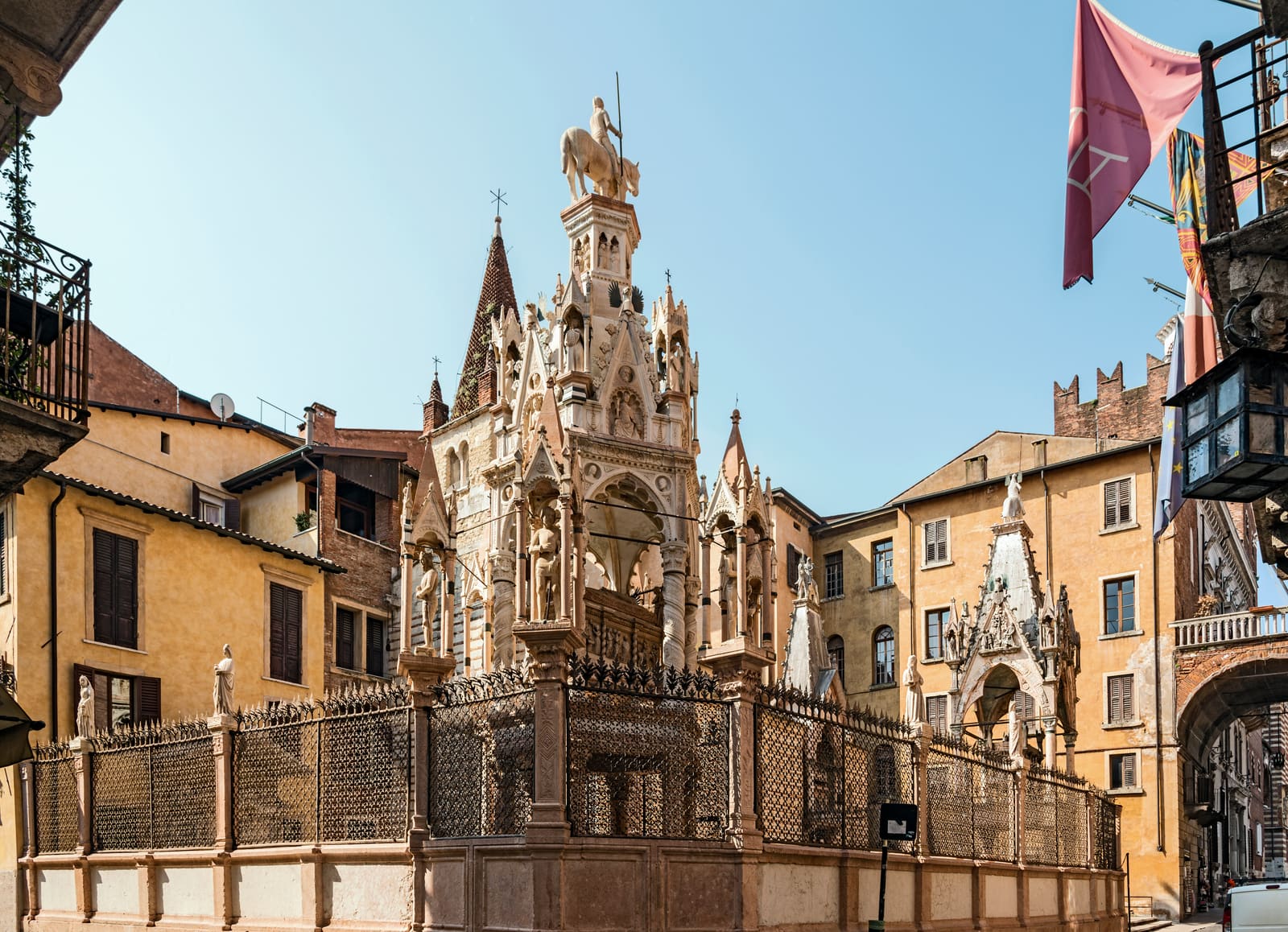
In the late Middle Ages, Verona became a free commune, the setting for the feuds between Guelphs and Ghibellines that would later inspire Shakespeare’s Romeo and Juliet. In 1262 the rule of the della Scala (Scaliger) family began, lasting 125 years and bringing the city a period of great prosperity: under Cangrande I and his successors, Castelvecchio, the Scaliger Bridge, and the striking Scaliger Tombs were all built — still among the city’s most recognisable landmarks today.
On 24 June 1405, Verona swore allegiance to the Republic of Venice, beginning nearly four centuries of Venetian rule that left their mark on the city’s layout and architecture, from the Lion of St Mark in Piazza delle Erbe to the Renaissance walls designed by Michele Sanmicheli. That long period of relative peace ended with the fall of the Republic in 1797, after which the city passed first to Austria and finally, in 1866, to the Kingdom of Italy.
Today Verona comfortably holds together its many layers: the Roman city of the Arena and the theatre, the Scaliger city of castles and towers, the Venetian city of piazze and palazzi, and the more recent legend of Juliet, which still draws visitors from around the world in search of the most famous love story ever told.
Did you know?
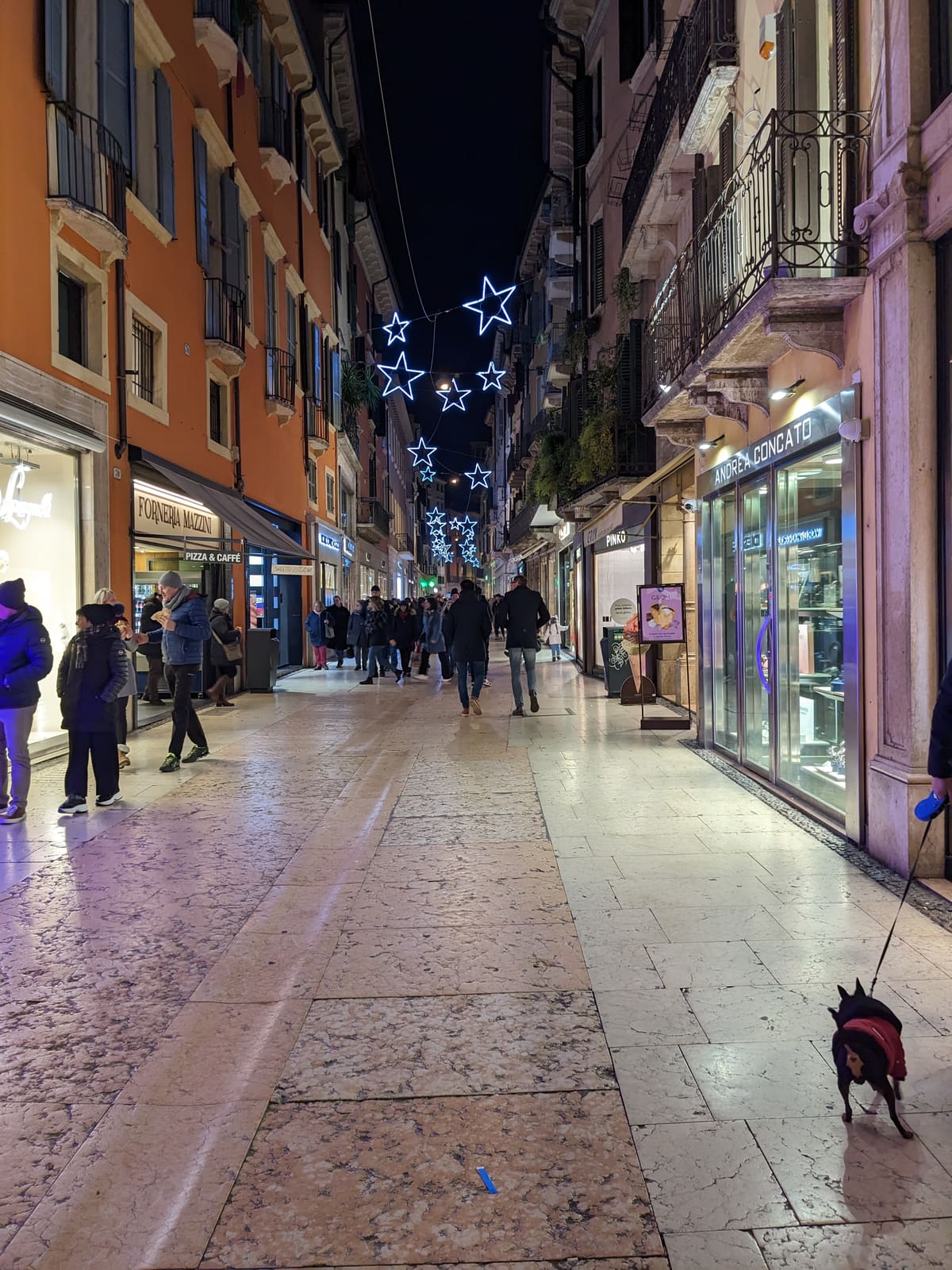
- Underneath a clothing shop on Via Mazzini, one of the busiest streets in the centre, lie the remains of a Roman house with a geometric mosaic still visible through a glass floor panel.
- A whale rib has hung under the Arco della Costa, the archway linking Piazza delle Erbe and Piazza dei Signori, since the 18th century — nobody is quite sure how it got there, and legend says it will fall on the head of the first honest passer-by.
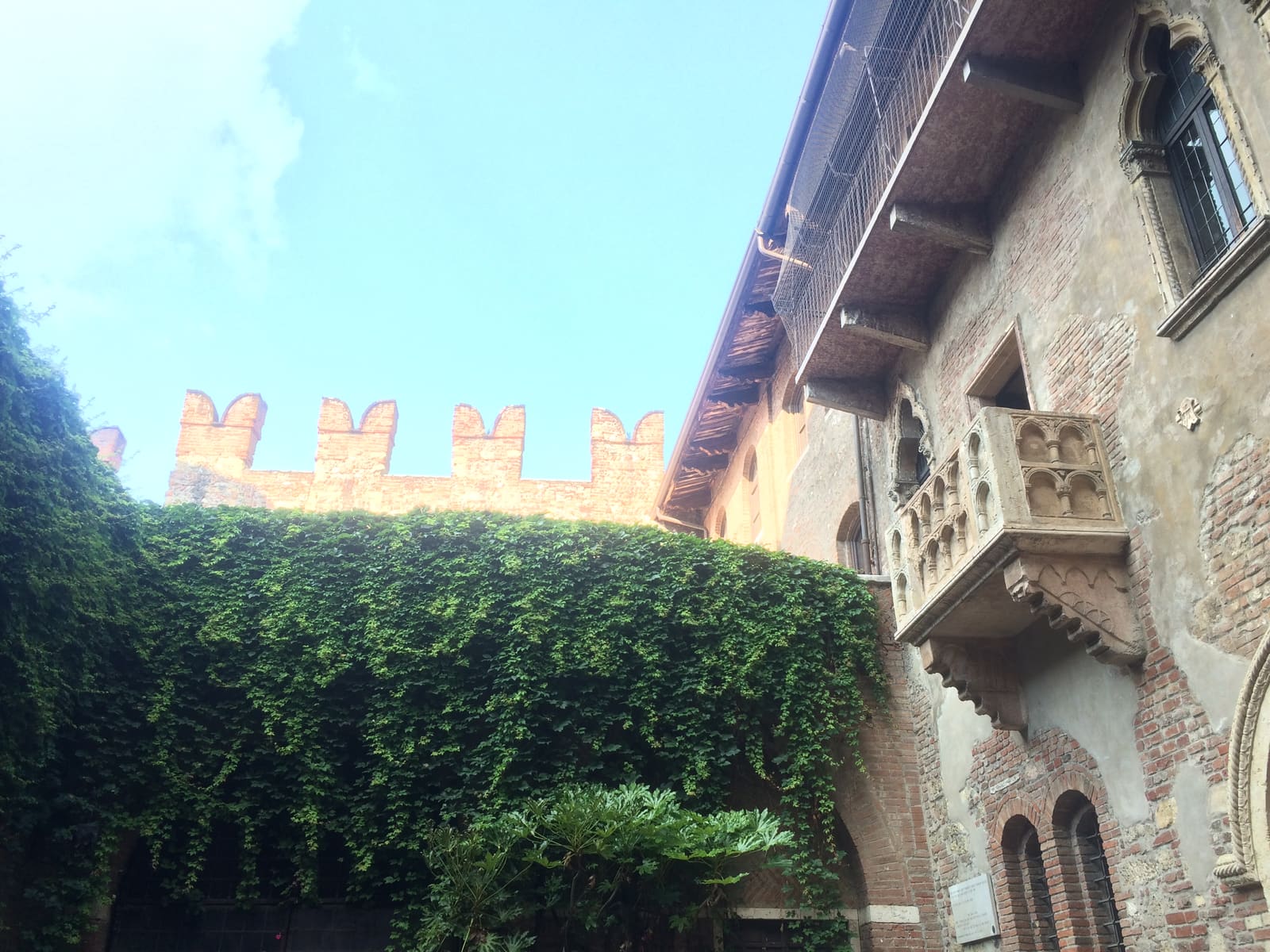
- Juliet's famous balcony isn't medieval at all: it was assembled only in 1936 by the city museum's director, using a Scaliger-era marble sarcophagus, to give physical form to Shakespeare's legend.
- The wrought-iron fence around the Scaliger Tombs is worked into a ladder pattern, a visual pun on the name of the della Scala ('of the stairs') family who ruled the city for 125 years.
- Ponte Pietra, the oldest bridge in the city, still contains genuine Roman stone: nearly destroyed by retreating German forces in 1945, it was rebuilt using blocks salvaged from the riverbed.
- Verona is home to one of the oldest working libraries in the world, the Biblioteca Capitolare, which preserves manuscripts dating back to late antiquity.
Must-see
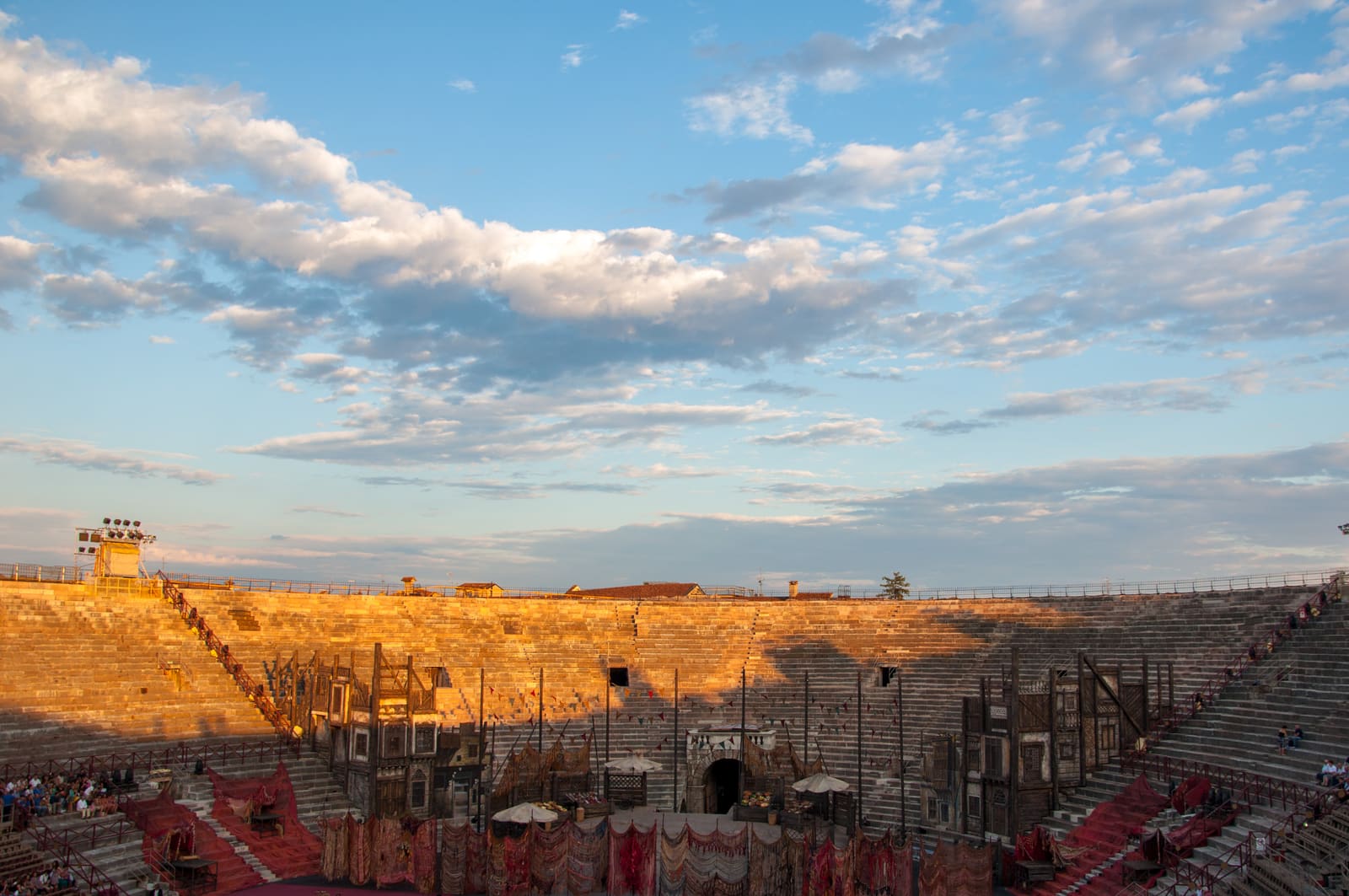
- Verona Arena — A remarkably well-preserved Roman amphitheatre from around AD 30, still hosting a world-famous open-air opera festival every summer.
- Juliet's House — A 13th-century townhouse whose surname link to Shakespeare's Capulets made it a beloved, if legendary, pilgrimage site for star-crossed lovers.
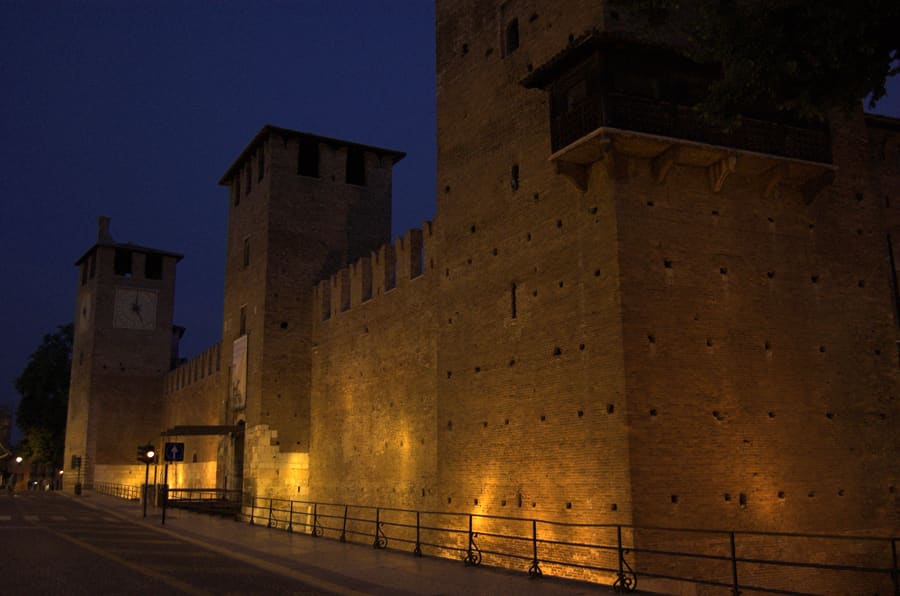
- Castelvecchio — A fortified 14th-century red-brick castle built by Cangrande II della Scala, now home to an important museum of medieval and Renaissance art.
Local dishes
- Risotto all'Amarone — Vialone Nano rice slow-cooked with the region's celebrated Amarone red wine and grated Monte Veronese cheese.
- Pastissada de caval — Horse meat slow-braised in red wine with spices, a recipe that dates back to the 16th century.
- Pearà — A dense sauce of breadcrumbs, broth, bone marrow and plenty of pepper, traditionally served with mixed boiled meats.
- Gnocchi de gnoco — The dish behind Verona's Friday-before-Lent carnival: potato gnocchi tossed with butter and sage or tomato sauce.
- Pandoro — The soft, star-shaped Christmas cake that originated in Verona, often paired with the sweet Recioto wine.
Practical info
Getting around
The historic centre, wrapped inside a bend of the Adige river, is easy to explore on foot — most major sights are only minutes apart. Much of the old town is a restricted traffic zone (ZTL), so it's best to leave the car outside and get around by AMT city bus (a single ticket is valid for 90 minutes) or bike share, with the first thirty minutes always free. To reach Castel San Pietro and its viewpoint, you can either walk up from Ponte Pietra or take the funicular.
When to go
September and October bring the most pleasant weather, with sunny days and smaller crowds than summer. From June to September, the Arena hosts its famous open-air opera festival, filling the city with a unique atmosphere, though July and August can turn hot and humid. Late spring, from late April to early June, is ideal for mild weather and wisteria blooming along the medieval lanes.
Good to know
- Many museums close one day a week, often Monday morning — always check current opening hours before planning your visit.
- During the Opera Festival (June–September), book accommodation and Arena tickets well in advance, as the city fills up quickly.
- Almost the entire historic centre is a restricted traffic zone (ZTL): if arriving by car, park in one of the guarded car parks outside the walls and continue on foot or by bus.
- Traditional restaurants tend to keep fixed lunch and dinner hours and close in the afternoon — reserve ahead, especially on weekends.